Showing posts with label library. Show all posts

Sunday, April 19, 2015

Questioning is the KEY for Success!

When Wiggins & McTygue launched a focus on Essential Questions, almost twenty years ago, they were ahead of the pack.  With the evolution of the Tech-dependent Millennial generation, EQ's are imperative for instruction.  The correct EQ will turn an assignment into a "discovery" to find the correct answer, using the vocabulary of the discipline!  The wrong assignment question will provide nothing more than a fact-fetching online session.

 EQ's can  transfer the learning responsibility into the student's hand and prevent the scenario pictured below. 
 

(Text from Sorry You're Lost, by Matt Blackstone) 

I'll be delivering PD on this Monday morning, in Missouri --for any educator attending MASL Conference, but most reading this will not be in Mark Twain territory for this event.  Listed below are a few sample EQ's which demonstrate how the right EQ can empower a student to learn.  These samples are 9 examples of the 99 Essential Questions found in our book, Rx for the Common Core, available via Libraries Unlimited.  (Use discount code: Q21520 for 20% off.)

EQ: Why do we need to be concerned about Plate Tectonics and your local plate.  
EQ: How is health and wellness defined by the technology of the time? 
EQ: How has the discovery of [your Chemical Element] changed the world?
EQ: How has the migration of people, changed the culture where they landed? 
EQ: How did Jim Crow cause the South to revert to a pre-Civil Way society?
EQ: How do animals think like scientists?
EQ: If you were living in Europe during the 1700's, would you have emigrated to America? 
EQ: How did scurvy impact sailing? 
EQ: Why is your digital footprint a real-world character reference? 

I'll be talking about EQ's, GQ's (Guiding Questions), TDQ's (Text-dependent Questions), and more, on Monday!  See you if you are in the area!  


Wednesday, February 18, 2015

Research Bulletin Board Ideas

Since Bulletin Board ideas are some of the top hits on this blog... here are 6 more for you!

PLEASE, PLEASE  remember - Interactive bulletin boards are more engaging for students.  90% of the bulletin boards I see are "teacher delivery" of facts.   Your question should be:  How can I create a bulletin board where student's contribute to the content?  So these ideas reflect this premise.  These are ideas where the kids contribute content...thereby transferring ownership and fostering engagement. 

1 - Wonder Wall - What are you wondering about today?  - Light bulbs templates where kids can post questions that are either related to a deeper content investigation.... or just something random such as, "Why do insects have more legs than humans?"   You could launch this bulletin board by showing them a wonder from "Wonderopolis" - asking what they think on the wonder...and then show them the short video clip answer from Wonderopolis.

2 - Question Stems -- In order to incubate the ability to question, place a major topic-problem-picture-or fact in the center of the bulletin board.   Ask the students to come up with the ?'s about the picture-problem-fact etc.   That way the kids see how one question...leads to many more.  This incubates their questioning ability.  Change the central question weekly.  When students have free time, ask them to brainstorm questions for the central idea.  If you have time, investigate the big idea on Friday for closure and place a new question-picture-problem-or-fact  up for Monday.

3 - Fascinating Facts I Found -  Pre-cut fact "F's" out and have them handy for kids to jot down something new they learned in a book, on a database, or during research.  Contribute those to the FF bulletin board.

4 - Spring Board!  - Dress the empty bulletin board for Spring and then teach a database asking kids to find a great Spring fact for contribution.  Here's an essential Question for the middle:  EQ - Why is Spring important?  Ask them to use the "vocabulary of the discipline" if they can (i.e. vernal, equinox, rotation, etc....)

5 - Seasoning Reasoning - EQ: Which season is the most important?  Find me a fact to support your claim! - Once again, asking kids to contribute to the board builds knowledge.  When their peers post something, they'll be reading other's claims.

6 - Research Beyond Road Signs  - Catch attention at the secondary level by asking them to find more than the "obvious."  This is like research.  We must move beyond the obvious to the why, how, what if, does... Place that statement in the middle of the board! Ask students in your library with nothing to do...to find you these obvious duh signs as below!


Friday, January 30, 2015

Skip a Pizza...Feed the World?

While driving this morning, I heard "news" that Pizza Hut expects to have 60,000 drivers on tap Sunday for an expected 2 Million orders.  I said, "Wow. And, that's only a piece of the pie!"  


Pizza Hut is only one American pizza vendor. There's Papa Johns, Dominos, and Little Caesars--to say nothing of the local pizza joints serving up splendid treats.   If we conservatively assume 4 major vendors, each serving 2 million pies, Americans will easily consume over 8 million pizzas this Superbowl Sunday.  That's in addition to the 1.23 Billion Chicken Wings (that's billion with a "B"...) TBC (to be consumed) as reported by USA today.    

Let's look at this through our SS lenses which want us to compel kids to "civic action."  Here's a quick outline for a relevant SS - Civic Action lesson:  Present students with the facts and ask them what they think.  

  • Use this USA Today article as a "seed text." (Or, find a more recent one if you can.) This text comes in at a Fleisch Kincade HS level appropriate for 11th-12th grade. 
  • Hold an "evidence-based discussion" and see what their reaction is.  Do they see this as a national economic shot in the arm?  Do they see this event as a social holiday or dietary travesty?  Your EQ could be:  How does the Superbowl Affect America and Americans? 
  • After the discussion, ask them what other questions they have.  Aggregate the questions and ask them all to choose 2 or 3  to investigate.  Each investigation becomes their own "inquiry path."  
  • Proceed to your library for a short-term research project to look up additional facts, research, and to dig deeper into the affect of the Superbowl upon Americans.  - Make no bones about it: This is a major economic event. Calculate the expenditures for your locality alone.  
  • As a learning concierge, guide the question brainstorming to include other geographic areas that are suffering from famine.  (Have pictures queued-up?)
  • Final knowledge product suggestions: Infographic to inform and advocate in the form of an Evidence-based Claim?  Evidence-based discussion and debate.  Local advocacy: "Skip a pizza - Feed the Poor?"  
  • Let students extrapolate the impact of [4] million homes replacing the cost of one pizza with a donation.  How many hungry people could we feed with that sum? 
I just did it.  I don't need the 300 calories in 1 slice.  I have my Rotel and Velveeta I can munch.  Enjoy the game and... your wings! 

Here are three good links, in case you're convicted.  

Friday, January 23, 2015

Wall of Shame? Or, Wall of Fame?

On our collegial listserv, operating as an informal PLC, someone asked for ideas on a 
R-E-S-P-E-C-T  or Dignity character education lesson.  I thought I'd share my response as an example of "repackaging" a lesson into an Inquiry-based Learning adventure.  This is something that might fit our new moniker "Mininiquiry" or a short research project that can be done in a lesson or two -- as compared to a "more sustained" research project.  

The CCSS calls for research to build and present knowledge to be an "anchor standard."  Have your teachers dropped anchor in your domain lately?  Here's one idea for them! 

____________________________________________________________________

Original email request:

"A 6th grade teacher just came to me. She is doing a project on "respect"
and "dignity" with her class and I am trying to help her come up with a
way for her kids to research this. (She originally just wanted the
computer lab where she was going to let her kids loose on the Internet -
until I stepped in and said, "Let me teach the class").

She doesn't even know yet what the final project will be - a paper? a
PSA? a trifold board? So I don't have a lot to go on...."

_________________________________________________________________________
Here are some possible thoughts to digest: 

* Begin with the end in mind —  You are correct that your teacher needs to
determine the final "knowledge product” (I.e. How will they show they have
learned the material - What do you want your students to KNOW or BE ABLE
TO DO)
* Final knowledge products should be linked back to the "big idea" - in  this case respect and dignity.
* She needs an essential question to hook the students into the relevance.
* So with all that in mind here¹s just 1 simple idea:

EQ:  If you were to build a "Wall of Fame"  and a "Wall of Shame" for
respect and dignity, who would be on it and why?   —  Build an EBC.

With an EQ like that, they are beginning with the end in mind.
  • This is student-centered. - They are in control of their search
  • They will think like “historians" - cause and effect  - historical heroes, etc. (You could align this with a historical “era" to hit a SS standard,etc.)
  • This is Inquiry based as they have choice and a voice.
  • It might help for the class to brainstorm together (Wonder) the characteristics of “respectful” or “dignified" people.  You could even activate thinking by having copies of newspapers or TIME magazines and ask them to find people currently who would qualify for either side.  Ask why?  That will incubate the thoughts of characteristics for either side.
  • These characteristics may become some of the keywords for searching.*   This also gives you an opportunity to use either a biography database, a newspaper database, or other resources and teach narrowing your search.
  • It also allows them to build an EBC (evidence-based claim) to support their answers. This correlates to ELA standards. 
  • This allows an easy way to layer technology via many different apps such as collage.com 
  • This is also not technology-dependent, if your school lacks it. 
  • The new C3-SS Standards encourage kids to get to “civic action.”  This is a perfect lesson to incubate that response.
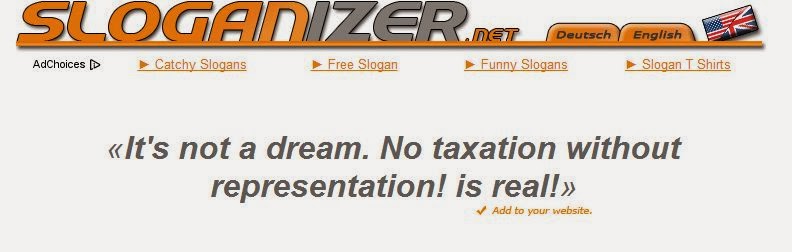
  • Include a slogan for the school? - Create a slogan for “dignity.”  (Have them visit www.sloganizer.net to create one…if it’s not blocked in your school.  Choose the English version not the German.)


Thursday, August 14, 2014

Are Your Kids Sluething or Snoozing?

For those out there in libraryland on a fixed schedule, you may be looking for "fresh" ideas to increase rigor and higher-level thought in your scheduled library time.  Despite the fact that you may be contractual "classroom coverage," you can seize every opportunity to prove you are a vital member of the instructional team-- while still valuing literature, reading, and having fun.  

Here are two examples of morphing the old paradigm of "library time" into innovative instruction in the library.  These two simple examples model adding rigor to transform an old passive "storytime" into a time for close reading, examination of the text, and discovery of meaning.  

If you really want to shock your building principal, consider asking him for the "item analysis" from annual testing, by grade level.  Tell him that you'd like to contribute to the weak areas and target a few instructional periods to address items such as inference, decoding vocabulary words, main idea and supporting details, and more.  After suggesting this once locally, I had a new librarian share that her principal looked at her in shock and said, "I've never had a librarian ask me that before."  (Instant SCORE!)

Another way to foster the "instructional partner" paradigm is to eliminate the "book exchange" from your scheduled library time.  When I was an elementary librarian (back in the Neolithic Age), all books were "returned" to the library in the mornings.  That way we reduced our library book exchange time by 5 minutes per class.  That may not sound like a great deal of time, but every 5 minutes counts. I've heard of schools where kids who want to check out a book, have to come during lunch, recess, before or after school, or with a library pass.  Every situation is different, so only you will know what works for you.  

The research says that the "more kids read the better they read.  The better they read, the more they'll comprehend.  The more they comprehend, the higher the achievement."*  Get those kids reading.  Increase your circulation.  Enlist the help of honor society students needing volunteer time.  Let them shelve your books! Increasing your instructional value is the best way to advocate for your position! 

*(Self-quote from "The Importance of Increasing the Volume of Reading" written for Expeditionary Learning, NYSED https://www.engageny.org/resource/the-importance-of-increasing-students-volume-of-reading . 'Based on the research of Marilyn Jager Adams) 


Tuesday, May 27, 2014

Creative Learning Commons!

Today, someone asked about books modeling creative writing for 2nd graders.  Wow and kudos. That was one high-expectation teacher!   Some second graders can hardly write, while others need challenge, but why not plant the seed of creativity even as it emerges? 
  
CCSS standards do not stipulate creative writing in the 2nd grade, but focus more on: Opinion, Informative, and Narrative.  In fact, the word "creative" is only mentioned twice anywhere in the standards: Once in the introduction and once in 11th grade.   Read this CCSS ELA introduction disclaimer: 


So you see, creative writing is not a standard, but they believe it could be an ability based upon what you've taught them. The only thing wrong with that approach is if students never try, how will they ever know they can?  Do they ever make the connection between what they read and trying to replicate that creativity?  

Here are a few lesson ideas aligned with the Common Core that might be more appropriate for 3rd or 4th grade or 5th grade, but if you want to try with 2nd...go for it!  
·       


  • First have them read closely a creative book. (Group them or individually) 
  • Identify characteristics of a "creative book"  or "creative writing" and simplify them down to elements in a checklist which students can look for:

·         Hide your message in a picture
·         Weave in a theme
·         Drama words
·         Color words
·         Words that paint a picture
·         Fancy words 
·         Feeling words
·         Describe rather than state 
*    Foreshadowing (hinting) 


  • Have them read closely to identify those  elements in a book - (There are so many robust book choices so choose ability-appropriate titles.) 
  • Choose a wordless book (examples below) and have students create words for the illustrations. 
  • Choose a great creative book, and cover the words--asking your students to create the narration for the pictures.   Then compare their writing with the original text so they can see (read) the difference and learn from the model.  


I say... if you have time in your library, why not try this? If you are observed, perhaps they will see your students closely reading for details in the text.  The students should be able to share their "text-based answers."  The students will be speaking with "evidence from the text."  Students could be using synonyms and vocabulary tools to add valuable vocabulary to their creations...Go for it!  

Thursday, March 27, 2014

'Got AIR?

When Nike launched their "Air" brand, the word became synonymous with 'height'   and achievement --thanks to Michael Jordan.  That had nothing to do with a reading program, but perhaps we can leverage the positive association in our Acountable Independent Reading (AIR) programs.   Another acronym has been added to our educational alphabet soup.  Our state has just recommended the use of an AIR, to help close the achievement gap. 

All over the web and on great Pinterest Boards you can find reading incentive programs intended to inspire kids to read.  (Such as this one:  Click here.)  However, the growing trend, or focus, is on reading incentive programs which include: student self-assessment; student self-selection; student self-motivation;  and independent accountability.  Students however, need a framework.  They need a skeleton.  They need a plan.  They need direction, perhaps.  They need a reason.  They need a goal and more.  We librarians know that all too well.    

As a vital link to closing the achievement gap, reading has always been front in center in the elementary years.  However, all the mandates of assessment dare we say, have pushed this vital skill off its pedestal and into the background.   Programs such as RIF or 1000 books club are still as vital as they were years ago.  If you are at the elementary level, insure that your district has implemented a connection to the community if possible.  Locally, our Barnes and Noble does a book drive every holiday season towards our local 1000 book clubs.  Last year our elementary libraries received over 3000 books for their clubs, courtesy of generous B & N customers.   Contact your local bookstore to inquire whether they would do this. 
 
Thanks to Saratoga B & N for their donations! 


Pictured below are students in a local rural district holding their new "Passports to Reading"  which we recently aligned with the shifts of the CCSS to increase reading of nonfiction, spotlight vocabulary, and find meaning.   Feel free to download and print this document if you are looking for a program for summer reading or for next year.   We printed over 5000 copies of these passports for our local elementary library programs.  Kids bring them to the library weekly.    Our 'passports' were tweaked from the Macy's sponsored reading program from NYC.  Attribution is given on the back cover of our modified version.   You may find the link to this PDF, for downloading  here:  Click. 


(Photo had all parents approval for posting...) 

We realize there are "electronic versions" of rating and accountability such as GoodReads, Opals and Follett "star rating" features, etc., but there is something kids find special and novel about holding this paper booklet.  It also requires no connection at home.  

So put on your thinking caps and plan a program for this summer or for next school year!  Use this to increase your visibility.   Brainstorm any great reading incentive program for your area.  Feel free to share links or ideas below!  Here's one I found yesterday:  "Iditeread"!   Click Here.  


Friday, February 14, 2014

Sloganize Your Research!

Today while virtually chatting with a colleague, she shared that she was still looking for a great graphic to represent our "Research Ambassador"  program.   We are turning out capable research change-agents and are proud of the role our Cybrarians are playing in transforming low-level-lame research units into deep learning endeavors that are aligned with the goals of the Common Core.    

We can view the Common Core as instruction that librarians have been advocating for over that last ten years.  Whether you are in a CCSS state, or not, the anchor standard, research to build and  "present knowledge," is a great goal.  Why else do research?  To sit on the findings?  To merely write a paper?    Research without presentation, is like a jeweler buying a gem and not putting it in a ring. 

When kids used to complete their research early in my library, I would differentiate the assignment and ask them to "sloganize" their findings.  If it were a biography, I'd ask them to get to the heart-and-soul of that person and create a slogan they might use in advocacy.    If it were an explorer, I'd ask them to choose three words that would best describe that person.  Or, to sum up the findings of their [issue] such as homelessness, I may have asked them to find a saying for their thesis. 

Having just finished reading  Sheinkin's book, The Bomb, I was wondering what Sloganizer would come up with if I tried to summarize Oppenheimer's mission.  I brainstormed three words that Oppenheimer might have chosen:  fusion finish first.   Here's what Sloganizer came up with for Robert Oppenheimer: 

This simple fun task can wrap up a "project" that may be less-than-stellar.  If a teacher hasn't collaborated and the kids are merely completing a deadly "packet,"  It instantly gives them a crumb at the top of Bloom's taxonomy. To summarize and create an enduring understanding is a tough task.    If you type that into the sloganize box, you can continue to hit the button until you get one of 500 them and variations you may like.  Here's what Patrick Henry might have chosen: 

While I chatted with a colleague via email,  I thought of using the old tool that I would send kids to for this purpose.  I wanted to come up with some short slogan to add to our Research Ambassador's bootcamp.  Here's a sampling of what sloganizer created. 

 
or 

So while I may not have found a graphic, I am close to a slogan!  
 From these I may choose a hybrid...  Research  Builds Brains and Empowers People! 

Have some fun today, and ask your students where else they could use this?  What would your inventor have sloganized for his invention?  What would the main character of the book have advocated for?  

www.sloganizer.net  - Choose the English Tab 

Wednesday, December 4, 2013

Information Fashion Show: subtle faux pas


Library resources are imperative.  
Information databases are wonderful. 
Resources for research may be impressive... Your shelves are filled. But, as librarians we need to move beyond our information fashion shows and start walking the runway with talk about the research process. We live in an information-ubiquitous world, or perhaps a misinformation-ubiquitous world, and our patrons (students and teachers) will not necessarily be impressed with your resources. They  may reply, "Well I can find just as good stuff on Google, Bing, SweetSearch, or other information valets. So, I'll politely listen and then go do what I want."    

We sat at a luncheon at AASL and I couldn't help noticing how no one was paying attention to the speaker when they were telling us what we already knew.  As soon as someone started talking about topics we hadn't heard about (the research behind students' online searching behavior), they had everyone's attention.  That is where we as librarian-leaders need to head:  We need to start talking about the process of research and how that has to change.    

  • Kids have changed
  • Curriculum has changed 
  • Resources have changed, and ...
  • Research has changed 
 When you start talking about 21st Century research needs, people may listen.   


The Common Core gives us the opportunity to invite teachers to the research table.  Get your lines ready:  "Did you know Research to build and present knowledge is an anchor standard?  How can I help you meet that?"   "Did you know that students need Essential Questions to drive research reports, rather than 'information seeking' opportunities?" 

Give your teachers a holiday present this season and move beyond being a resource reservoir--model the research triage they need.   Here is a link for our teacher self-assessment tool used to awaken ah-ha moments with teachers: click here.

Monday, November 25, 2013

Removing the Guilt of Excessive Calories...and reforming research tasks

'Tis the season to spend money, eat too much, shortchange our sleep, and remember our abundant blessings.  As I contemplate which flavor pie to bake, I am reminded that people are still recovering from Super Cyclone Haiyan and living in shelters.  With 2.5 people in need of food or assistance, I am compelled to care...as I plan to cook. Here are three links to relief organizations taking donations: 


There are many other worthy organizations, but before making a donation, insure that they have their books audited for accountability.  When disaster strikes, it shouldn't matter which religion is delivering relief--as long as aid arrives.  These organizations have helped out in  areas within the continental US who have also met with recent devastation.    

It struck me that we often  are researching "facts" and disaster preparedness, but rarely embed a "response."  As students all around America study disasters, we should strive to embed a humanitarian element of response.   As we teach kids the Inquiry Cycle and they approach the last phase of "reflection"  I wonder how many of these kids have  a self-centered view of the research task.    Would it be possible to turn the research task into a research and respond, rather than a fact-fetching report gathering task where the kids are just reporting on the travesty? 

Rather than having our kids create  personal disaster plans for avoiding damage from superstorms, could we concentrate on building better relief plans?  Could knowledge products  include media plans for to help with disaster relief-- rather than PSA's about what we should do to get ready for a cyclone which will never hit [our area such as the Adirondacks of NYS]. Could we have students calculate damage and reconstruction costs and prepare FEMA presentations for weak links they found?   Now those are "real world" issues which need to be solved.   

So to assuage my guilt of consuming too many calories, I have made a donation. I wish I could do more, but at least I've done a little part.  

Thursday, November 21, 2013

AASL13 IdeaXchange Recap

Every national conference I look forward to the booths of the  IdeaxChange.  There are so many great ideas buzzing in one place and I collect tips, hyperlinks, brainstorms, and pre-tested wonders to bring back to all our local librarians.  If you didn't get the opportunity to attend AASL 2013, please mark your calendar for Columbus, Ohio in 2015.    Listed below are just a few of the great ideas shared during this fabulous conference:  

  • If you are wondering where to get started with LIBRARY CENTERS,  then you will want to check out this website from the 'Centered School Library http://librarylearners.com/  This group presented how they are committed to library centers as a way of learning in their space.  
  • The John Hersey High School, outside of Chicago, developed an Academic Resource Center to support academic success by providing space, resources, a store, help, technology, etc.   Why not check out their page or drop them a note and ask questions.  Come up with a "name"  to make what you already do "visible"  and take it to the next level!  http://bit.ly/167kuLf 
  • A few librarians from Boston Arts Academy demo'd an App called "Nearpod"  which was interesting.  This App enables teachers to use their ipads to manage content on students' ipads, ipohone, or ipods.  I guess this is virtual device sharing?!  
  • The Heifer International Group was there with a booth suggesting that they are utterly a great "action" cause for classrooms who get a "call to community action."   While speaking in Arkansas, I had the opportunity to see the Heifer International Headquarters and was impressed.  This is such a worthy cause and I made contact with our state representative who will come and do in-building connection and provide ideas for curriculum integration.  It so happens that in NY, some "exemplary" curriculum has just the "spot" for this endeavor.  We will be rolling out this beautiful bovine idea locally, hopefully, this winter.  
  • Two Connecticut librarians  shared their idea of using Library Pals - shared blog to connect with primary grade students.  I loved this idea of getting kids used to "contributing" (presenting knowledge) early in their educational career.   There link:  http://tiny.cc/libPals 
  • Songbird Sue Kowalski and her bullhorn,  proclaimed the merits of her IStaff student tech team in Syracuse NY.  Not only is Sue always smiling and funny, but she is known for her unique student integration programs.  If you haven't seen the merits of her student IT training, you should contact her.
     This highly acclaimed student-empowering program is easily replicated and helps all teachers in her building.  Her website is: http://pinegrove.libguides.com/iStaff   
  • Digital Citizenship was discussed by a couple of booths, and here's one link for your perusal: https://sites.google.com/site/digitalcitizenlessonplans/  Don't miss it. 
  • Long-time library friend and publisher, Hilda Weisburg was there with her recently released fantasy novel: Woven Through Time - Don't miss this award winning new book.  And...the cover is lovely.  We librarians know that books are often chosen for their cover! This is on my must-read list. 
  • DO NOT MISS  this wiki which is a wonderful resource of Mentor Texts!  http://best-book-lists.wikispaces.com 
  • Stacey Ratner presented her "mock" Newbery program which successfully picked Ivan last year.  Even her students will tell you this is not "mock"  This is serious business. This too is easily replicated in your library.   
  • IF I HAVE MISSED YOUR IDEAxCHANGE, please leave your links and message in the comments and share those with all!  We'd love to see you showcase your great idea! 
So mark your calendar for the next AASL conference and plan on attending to bring home many great innovations to your space.   

Sunday, October 20, 2013

Synthesis and Smoothies

I love smoothies as they are the greatest for life-on-the-run. In the morning the blender gets filled with kale, walnuts, soy milk, bananas, blueberries and flax seed for a breakfast shake that rivals the mulch-pile. These seemingly unrelated ingredients get pulverized--synthesized--into a high-powered drink that sticks with me. That is what we long to see in our students -- Synthesis of seemingly unrelated ingredients (information) into a smooth conclusion supported by evidence.  

Two years ago when we ventured down our Repackaging Research campaign, we had stickers printed that say, "I SYNTHESIZE." These are coveted in our libraries and distributed and worn as a badge of honor when students conclude, or make sense of, information they have found. Even high school students prize the recognition, says Jan Tunison of Scotia-Glenville High. Yesterday a colleague posted on a listserv that she was looking for tips on Synthesis and it compelled me to share a few thoughts to encourage synthesis: 

  • Research should be packaged as a question in need of an answer 
  • If a student only has to find facts and spit them out, they will not get to the synthesis stage 
  • Synthesis comes when they have to answer a question, based upon the facts  
  • When they synthesize their facts, they usually draw a conclusion based on evidence (facts) and that becomes their hypothesis about which they write.   


Students have trouble synthesizing because they have spent years merely "fetching facts."    
(See my fetching facts post here..x.) 

In our upcoming book, Rx for the Common Core, we have a few pages on synthesis and a number of graphic aids to help teachers and librarians foster synthesis in their research reports.  

Tuesday, September 24, 2013

Picture Books as Mentor Texts

Early this morning, someone posted on a listserv the following question, and I applaud this librarian for seeking to meet her colleagues' needs: 

Good Morning!
I have a middle school teacher looking for picture books to help teach her students about 'fix up strategies'.... She is also looking for picture books to help with reading strategies such as; what do you do when you come to a word that you don't know or is confusing. Books to help students with those kinds of strategies (any reading strategy). Any ideas? 

These types of books are called "mentor texts"  and ABC Clio has just released a new book targeting this instructional need.   (click here for more info) There are also others on the market from other publishers.  Kelly Gallagher also has a good secondary book on "mentor texts" called  Write Like This. 


There are many publishers who will put a label on their book and call this a "mentor text"  just to make money.  However, a teacher must examine the content and know how this will be used to address their instructional needs.  We can't just teach a book because it is "cute."   

Years ago, I used the book Earthlets  to teach point of view, for example.  It was a winner, and I suspect that with the new crazy rise of mentor texts Earthlets will return in print.  The publisher would be remiss not to market it again.   
  
Another secondary example of a mentor text would be the first two pages of The Old Man and the Sea.  When a student reads that, he should practically feel that he knows this old man.  The descriptive writing is so rich--almost visual.  That is not a picture book, but a great example of descriptive writing.  

In the Common Core exemplar book, Stellaluna, you will see the tricolon sentence structure  modeled frequently.  

In Mr. Maxwell's Mouse,  I love the questioning that the little mouse-soon-to-be-dinner asks.  This would be a good mentor text for librarians teaching younger students to brainstorm questions.  Were his questions open-ended? (no) Were his questions getting him to his goal? (yes) Etc.    This book would be better used to teach foreshadowing.  

The book Diary of a Worm is another perfect mentor text for Point of View.    So you see the list goes on and on. 

If you are creative, you can glean many opportunities to use mentor texts.  So to answer the original question, "what is a book to teach  "decoding" of meaning or inferential deduction of unknown vocabulary to a middle school class, I would suggest finding a "rich text" picture book and then teaching the strategies around the text.  To use the mentor text, you-yourself have to know the strategies of decoding meaning:  
  • What is the word?
  • Is the sentence a positive or negative sounding sentence helping to determine whether the word is a positive or negative connotation... 
  • What are the surrounding words  (neighborhood friends) which might lend meaning to the word?  
  • Is a synonym close by?   Etc. 
Try William Steig's books.  Check out the Common Core exemplars and see whether they afford you the opportunity to decode tough vocabulary. 

I give half-day PD on this topic for librarians and it often transforms their instruction.  We have to carefully craft our lessons to embrace a learning target.  We cannot just have "library time" reading cute books.  We have to know why we are reading books to kids and where we are going. So, I ask you...Where are you going today with your students?  What is your learning adventure?  
________________________________________________________________________

Resource recommendations from Andrea Williams, Ballston Spa Elementary Librarian, my mentor text partner: 
"Mentor Text Resources that I found helpful. There are literally thousands though."

Wednesday, July 3, 2013

Common Core Bulletin Boards Ideas for Your Library:

Focusing on the "shifts"  here are a few good ideas for interactive bulletin boards.  Remember, bulletin boards should not be static, but should be interactive making them dynamic.  Learning is not a passive activity but an engaged process.  With that in mind, here are nine new ideas to support the CCSS via your big fat bulletin board! 

  1. Vocabulary shift -  Choose a label such as "Word Families - FIND A BETTER RELATIVE"   and place  papers with big bold simple academic  words printed on top such as:   ARGUE,   LOUD,   KIND,   LOVELY,    TRASHY,   RICH,    POOR,    UGLY,    YUMMY,    and ask your students to contribute BETTER word choices that will help them sound  richer, smarter, and ready for success.       These suggestions may include "relatives"  such as quarrel, boisterous, benign, exquisite, shoddy, philanthropic, destitute, hideous, scrumptious, etc.    
  2. Vocabulary shift -   Your BB heading could read "Words are the Building Blocks of Success"  and then you can have pre-made/copied Lego blocks, building blocks, etc... for the kids to suggest "cool"  words they find within books.  Together all the students could build their word wall from books.  
  3. Positive vs. Negative words - Another Vocabulary BB idea was suggested by a librarian from Ossning, NY:  Wanting to build vocabulary subtle differences in word meaning, Dawn divided her BB into 2 halves and labeled one side "positive words" and one side "Negative Words."  Her students built the wall with words innately having  subtle differences in connotations.  She said the kids "got it."  They had to critically view the word beyond just face value meaning.  
  4. Citing Evidence from the text -  BB heading could read "Why Earth is a cool place: 100 places I'd like to see someday...."   and  whenever someone comes across something cool in their reading, they could "pin" it on your world map."  You could even have citation cards with the book and page number where the student read about this cool location, building, cave, mountain, sea, etc.  
  5. Citing evidence - "Fiction or Fact" - True or False?   This bulletin board could have hanging cards posted.  Each card would contain a question a student had from a fiction book, that they had to investigate to ascertain whether this was fact or fiction.  This has often been called a "Wonder Wall"  when the purpose is to get kids to ask questions needing investigation.  
  6. Close Reading -  "What did you learn today in a library book?"   Colorful index cards will provide your students an opportunity to share their knowledge based upon what was in print (rather than their opinion).  
  7. Complex thought -  "Today I had to digest this difficult word meal:"  In the center of the board, you could place a captivating poem, with difficult words.  This doesn't have to be stodgyl, but could be Sid Fleischman's Headless Horseman Rides Tonight, even... Checkout the vocabulary in that book!   Or, a difficult quote needing digestion.   Challenge a few students to post a sentence that tripped them.  If they have to "stop in their reading" to digest something...then it deserves to be digested.  
  8. 50%-50% mix -  With the CCSS claiming kids should read more non-fiction to build their "common knowledge"  or "prior knowledge"   you could have your students build their own "Knowledge is Power"  wall.   Once again using a template such as a power plug, lightning bolt (or something to denote power) you could have students write down great "facts" they found in their books.  
  9. 50% - 50% Connection - Quotations worth sharing -  Challenge students to value ideas found in books by asking them to share meaningful lines found in either fiction or non-fiction texts.   Kids could denote whether this was in a fiction book or a non-fiction.  

Wednesday, June 19, 2013

Wonderopolis and the Common Core

Every now-and-again while walking on the Internet Superhighway, I stumble upon a site that is so great that I just want to give it a flash-mob-shout-out.    Wonderopolis was one of those stops this morning.   While investigating new summer sites for students, I chuckled over a few of these wonders and in surprise I said... "What a great Common Core tool!"  This simple site:
  • models Inquiry phase 1... 'Wonder" 
  • teaches kids to answer questions with fact 
  • answers questions with evidence and authority 
  • embeds vocabulary of the discipline in its answers...so that you can introduce that trick to your students--If they understand essential vocabulary to the "topic" then will likely understand the topic.  

If I were still and elementary librarian, I would display this on my Whiteboard and ask the kids to pick a wonder such as Wonder  of the day #984 (www.Wonderopolis.org) 
  Do Sheep Shrink When It Rains? 


 Here's a quick CCSS aligned library lesson: (pick an EQ...)
 EQ-  How can our non-fiction books help us to answer questions in life? 
 EQ:  How can I answer questions using facts, rather than just what people tell me?
 EQ:  Can you make an evidence-based claim to support an answer? 
 EQ:  How can keywords help you find information? 
  • Display WONDEROPOLIS  on your whiteboard or LCD. 
  • Have the students "pick" a wonder question.
  • Have them work with a team to: 

  1. find resources on the [topic] - identify keywords, search, use index, read for details
  2. find "evidence for the answer" 
  3. make an evidence based claim to support their answer to the "wonder" 
  4. Re-group and compare answers -- play the WONDEROPOLIS  video at the end and see if it matches the "evidence based claim"  your students created.   

Now I've found one good thing my Verizon bill supports, besides my own connection to friends and family!  Thank you Verizon, Thinkfinity! http://wonderopolis.org/

Friday, June 7, 2013

A Baker's Dozen (or more) Questions for Research

The Common Core is hot on getting kids to think--to support, to validate, to wonder and more.  This should be the “Year of the Question”  since research is “the next big thing” for the Common Core.  So what’s the difference between an essential question and a guiding question?  What’s the big deal?  And, how can I spotlight the difference?   Here’s the scoop: 


An EQ should drive a research unit.  These EQ's should be "umbrella questions"  or "big idea" questions that  ask a question for investigation.
     Ex.  How are countries globally interdependent? 

     Ex. What would your Patiot say to America today? 
     Ex.  How do themes in literature reflect real-life scenarios? 
     Ex.  How do I access, analyze and synthesize information and why should I care?  

Guiding Question’s 
These cause students to think and may not always have the same answer
Skill Questions
These usually have the same answer and can be used to assess 
Is all information good?
Is this information usable?
Where can I find good information?
Is this information biased?
How do I assess information to determine whether it’s good?
Is this information credible?
How do I assess information to see if it’s usable?
Is this information timely?
How do I tell if information is biased?
Is this information reliable?
How do I tell if information is credible?
Do I see any groupings in my information?
When do I want timely information?
What can I conclude from this information?
How do I assess reliable information?
Does this information match other information I   have received (supported? Vs. outlier? ) –
What information supports my conclusions?